Welcome to Bible Origins |
Your Host: Walter Reinhold Warttig Mattfeld y de la Torre, M.A. Ed. e-mail: mattfeld12@charter.net |
This site presents my research, from an Anthropological and "RATIONALIST-HUMANIST VIEWPOINT", on the Bible (the Old and New Testaments). Using findings from Biblical Archaeology, the various books of the "Primary History" (Genesis-2 Kings) are dated; for the book of Genesis, certain Ancient Near Eastern concepts and motifs are identified as having been borrowed, transformed and reinterpreted by the Hebrews. The biblical texts mention various cities, towns, villages and hamlets, some of which have been archaeologically identified and excavated, their occupational parameters being established. As explained in some of my articles, some sites reveal that some places were not in existence or were abandoned when certain events occurred according to Holy Writ. The non-existence of these places reveals that certain elements within the biblical stories had to have been composed centuries after these places came into existence, such that the audience had no knowledge that these places didn't exist within the historical time frames they are portrayed as appearing in. A series of articles of my own composing are posted on this site. I might add many of these articles are of a controversial nature, and challenge at times the current consensus amongst Humanist scholars. I must caution the viewer that I am an "amateur" scholar, having said that, the reader should always possess a sceptical but open, and inquiring mind. Everyone has his/her biases that they bring to a text and of course, this bias is reflected in one's own writings. Finkelstein and Silberman have noted that some sites appearing in the Book of Joshua did not come into being until the final decades of the 7th century BCE, suggesting that the Primary History (Genesis-2 Kings) is no earlier : "This basic picture of the gradual accumulation of legends and stories- and their eventual incorporation into a single coherent saga with a definite theological outlook- was a product of that astonishingly creative period of literary production in the kingdom of Judah in the 7th century BCE. Perhaps most telling of all the clues that the book of Joshua was written at this time is the list of towns in the territory of the tribe of Judah, given in detail, in Joshua 15:21-62. The list precisely corresponds to the borders of the kingdom of Judah during the reign of Josiah. Moreover, the placenames mentioned in the list closely correspond to the 7th century BCE settlement pattern in the same region. And some of the sites were occupied ONLY IN THE FINAL DECADES OF THE 7TH CENTURY BCE." (p.92. "The Conquest of Canaan." . Israel Finkelstein & Neil Asher Silberman. The Bible Unearthed, Archaeology's New Vision of Ancient Israel and the Origin of Its Sacred Texts. New York. The Free Press. 2001. ISBN 0-684-86912-8) Finkelstein and Silberman have suggested that the Pentateuch and Torah as presented in the Hebrew Bible, are compositions no earlier than the late seventh century BCE, based upon the archaeological evidence- "Until recently both textual scholars and archaeologists have assumed that ancient Israel reached the stage of full state formation at the time of the united monarchy of David and Solomon. Indeed, many biblical specialists continue to believe that the earliest source of the Pentateuch is the J, or Yahwist, document- and that it was compiled in Judah in the era of David and Solomon, in the tenth century BCE. We will argue in this book that such a conclusion is highly unlikely. From an analysis of the archaeological evidence, there is no sign whatsoever of extensive literacy or any other attributes of full statehood in Judah - in particular, in Jerusalem- until two and a half centuries later, toward the end of the eighth century BCE. Of course no archaeologist can deny that the Bible contains legends, characters, and story fragments that reach far back in time. But archaeology can show that the Torah and the Deuteronomistic History bear unmistakable hallmarks of their initial compilation in the seventh century BCE. Why this is so and what it means for our understanding of the great biblical saga is the main subject of this book. We will see how much of the biblical narrative is a product of the hopes, fears, and ambitions of the kingdom of Judah, culminating in the reign of King Josiah at the end of the seventh century BCE. We will argue that the historical core of the Bible arose from clear political, social, and spiritual conditions and was shaped by the creativity and vision of extraordinary women and men. Much of what is commonly taken for granted as accurate histroy -the stories of the Patriarchs, the Exodus, the conquest of Canaan, and even the saga of the glorious united monarchy of David and Solomon- are, rather, the creative expressions of a powerful religious reform movement that flourished in the Kingdom of Judah in the Late Iron Age. Although these stories may have been based on certain historical kernels, they primarily reflect the ideology and the world-view of the writer. We will show how the narrative of the Bible was uniquely suited to further the religious reform and territorial ambitions of Judah during the momentuous concluding decades of the seventh century BCE. But suggesting that the most famous stories of the Bible did not happen as the Bible records them is far from implying that ancient Israel had no genuine history. In the following chapters we will reconstruct the history of ancient Israel on the basis of archaeolgical evidence- the only source of information on the biblical period that was not extensively emended, edited, or censored by many generations of biblical scribes." (pp.22-23, "Introduction." Israel Finkelstein & Neil Asher Silberman. The Bible Unearthed, Archaeology's New Vision of Ancient Israel and the Origin of Its Sacred Texts. New York. The Free Press [Simon & Schuster Inc.]. 2001. ISBN 0-86912-8) In concluding their research on the Exodus from an archaeological perspective, Finkelstein and Silberman suggest the Exodus narratives are of the late 7th or early 6th centuries BCE- "All these indications suggest that the Exodus narrative reached its final form during the time of the 26th Dynasty, in the second half of the seventh and first half of the sixth century BCE." (p.68, "Did the Exodus Happen ?" Finkelstein & Silberman) Secular humanist scholars have determined that contrary to the traditional understanding of Moses having written the Pentateuch, internal clues suggest it is a creation of ca. 562-560 BCE on the basis of 2 Kings 25:27, which mentions the Babylonian king Evil Merodach, who reigned during the aforementioned years (allowing that endings in a composition date the work). Other clues from archaeology have caused many scholars to realize the composition is quite late, no earlier than LATE IRON II TIMES, as noted by MacDonald. Burton MacDonald, a professional scholar and archaeologist makes the following observations from his many years of experience in surveys of sites in Transjordan, ancient Edom, Moab and Ammon (emphasis is mine)- "My experience in the field of Near Eastern archaeology has led me to the general conclusion that the biblical stories about Transjordanian places and events best fit into the Iron II period and later. This conclusion comes from a general knowledge of the results of current archaeological work throughout Jordan and specifically from my archaeological survey work south of Wadi al-Hasa, in the Southern Ghors and Northeast `Arabah, and in the Tafila-Busayra region (beginning 1999). The findings of the above-listed surveys indicate there are few, if any, Late Bronze Age materials and a paucity of Iron I Age materials in the areas being surveyed. On the other hand, the Iron II Age is well represented in all of these areas. I WAS THUS FORCED TO QUESTION THE TRADITIONALLY HELD OPINION THAT THE MOSES-LED GROUP, ON ITS WAY FROM EGYPT TO THE LAND OF CANAAN, PASSED THROUGH/AROUND EDOM (AND MOAB) DURING THE LATE BRONZE-IRON I PERIODS. On the basis of recent archaeological work, I concluded that a Moses-led group would have encountered little, if any, opposition if it had passed through the territories in question during the periods traditionally associated with this event. However, recent archaeological evidence indicates that opposition to such a passage would be understandable during the Iron II period. Thus, the narratives relative to the Exodus best fit the settlement history of the area during the Iron II rather than the previous two archaeological periods. Similarly, the narrative of Israel's defeat of Sihon and the capture of his capital city of Heshbon would fit better the archaeological history of this site during the Iron II rather than the Late Bronze-Iron I period. This does not mean that the present writer denies that there are older traditions behind the biblical narratives. However, THE TEXTS IN QUESTION WERE MOST PROBABLY WRITTEN IN LIGHT OF THE SETTLEMENT CONDITIONS THAT PREVAILED IN THE IRON II PERIOD AND PROBABLY TOWARDS THE END OF THAT PERIOD. Thus, the assumption here is that although the biblical writer may have used material that predates his time, he set that material into a context, namely, the Iron II AND LATER PERIODS, that would be meaningful to his readers." (pp.4-5, "Introduction." Burton MacDonald. "East of the Jordan" Territories and Sites of the Hebrew Scripture. Boston. American Schools of Oriental Research. 2000. ISBN 0-89757-031-6) MacDonald, speaking of Kadesh-Barnea being portrayed as a town in Edom's border (Nu 20:16), it being identified with either Ain el Qudeirat or Ain Qadeis in the Negev- "The text probably reflects the situation at the end of the seventh or beginning of the sixth century when Edom moved, at a time when Judah was weak, into the eastern Negeb. This would have led to hostility, or perhaps increased hostility, between Judah and Edom at the end of the monarchial period (Briend 1987: 42).Thus the text describes a particular geographical and cultural situation, rather than an historical condition at the end of the Late Bronze or beginning of the Iron Age." (p.68, "Exodus Itineraries." Burton MacDonald. "East of the Jordan," Territories and Sites of the Hebrew Scriptures. Boston, Massachusetts. American Schools of Oriental Research. 2000. ISBN 0-89757-031-6) In speaking of Mt. Hor's location, MacDonald again stresses that the text is probably of the 7th or 6th century BCE- "The difficulty in accepting a mountain in the neighborhood of Petra as the location of Mount Hor is that Petra is not on the 'edge/border' of Edom but in Edom. Petra and vicinity would have been at the western edge of Edomite territory only in the city's formative years. The text, however, appears to be late and dated to a time, possibly the seventh or sixth century, when the Edomites had expanded westward into the central Negeb." (p.70, "Exodus Itineraries." Burton MacDonald. "East of the Jordan," Territories and Sites of the Hebrew Scriptures. Boston, Massachusetts. American Schools of Oriental Research. 2000. ISBN 0-89757-031-6) In his conclusions on the Exodus Itineraries, MacDonald notes that most of the sites that can be identified, appear in Late Iron II, suggesting the narratives are very late- "On the basis of textual and literary study of these texts plus archaeological evidence from biblical sites identified with confidence, we may conclude that the passages in question probably date to the end of the Iron II period. Only then were most of the identified sites occupied; there is little or no evidence of their occupation during either the Iron I or early Iron II Age." (p.98, "Exodus Itineraries." Burton MacDonald. "East of the Jordan," Territories and Sites of the Hebrew Scriptures. Boston, Massachusetts. American Schools of Oriental Research. 2000. ISBN 0-89757-031-6) 26 Dec. 2001 Update--- I want to advise the reader that it is no longer my understanding that Ezra wrote the Primary History ca. 458 BCE. In a recent article I explain why I now understand that the Primary History (Genesis-2 Kings) is an original composition made in the Exile, ca. 560 BCE, by one author, and that it is NOT an accretion of various authors (JEDP) and it is FREE of any later redactions (there is no P). For the new arguments cf. my recently revised article titled |
( Website created 17 December 2000 ) |
If you desire to download this entire site (37 Megabytes) to your hard drive to read off line, I reccomend Teleport pro, Free-Shareware to do the job. To find quickly "names" or "concepts" in my various articles please use the below Pico on-site search engine, then click on the article link presented, then hit "Control F" and type in the word you seek, in context, for a speedy search of the file/article. |
"If you would subject all things to yourself, subject yourself to reason." --Seneca |
"Only knowledge, then, is power and freedom; and the only permanent happiness is the pursuit of knowledge and the joy of understanding." --Will Durant |
"Happy the man who has learned the causes of things, and has put under his feet all fears..." --Sir Francis Bacon |
UPDATED : 27 September 2004 |
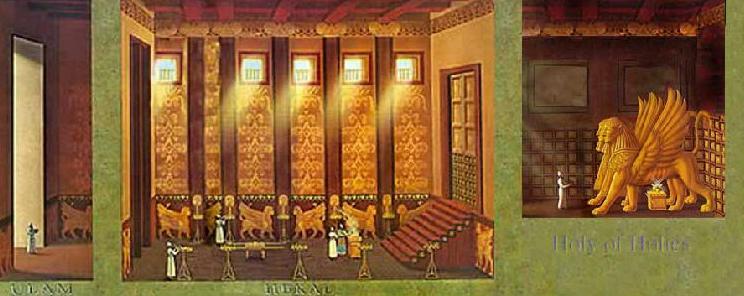
King Solomon's Temple at Jerusalem |
Warning: When you download an article to read "off-line" the blue-underlined urls embedded with the text will NOT appear and you will NOT be able to access the maps, illustrations and related articles- this caveat applies to ALL my articles posted at this website. That is to say, all my articles at this website were designed to be read "on-line." |

